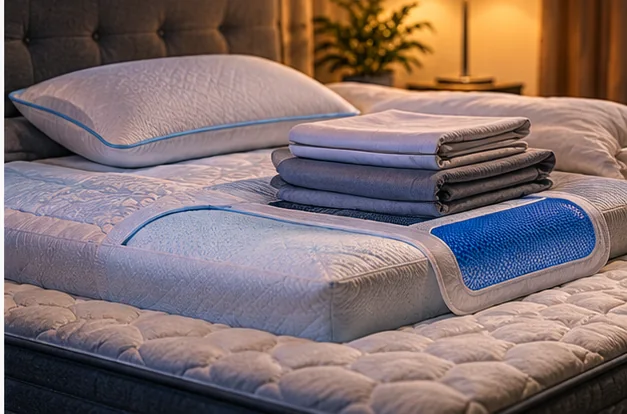
Products and configurations to compare
100% cotton percale sheets
Percale's airy structure is the easiest weave recommendation for a warm sleeper.
Best when: you like crisp hotel-sheet feel and airflow
Watch for: wrinkles more and can feel stiff before washing
Cotton sateen sheets
Sateen is ideal when you want a smoother hand and less crispness.
Best when: you prioritize silky drape over maximum airflow
Watch for: can feel warmer and show wear differently
Linen sheets
Linen can outperform both on airflow and moisture handling for some sleepers, but the feel is distinctive.
Best when: you tolerate texture and a rumpled look
Watch for: high-quality linen is expensive and feels rougher at first
Weave is not fiber
Percale and sateen describe how cotton yarns cross, not what the yarns are made of.
Thread count is easy to abuse
Very high counts can come from multi-ply yarns and dense construction that feel less breathable. Do not shop by the biggest number.
Percale starts crisp and softens
Expect more wrinkles and a dry, cool hand. Washing usually improves comfort over time.
Sateen feels smoother immediately
The weave exposes more thread surface and creates sheen/drape, which many people interpret as more luxurious.
Room humidity changes preference
In humid climates, crisp breathable fabrics often feel better than dense drapey bedding.
Materials matter more than marketing labels
“Cooling,” “hotel,” “luxury” and “cloud” do not tell you how fabric will feel. Fiber, weave, fill, loft and construction do. Percale cotton tends to feel crisp and breathable; sateen is smoother and drapier but can feel warmer. Latex pillows are responsive and ventilated; memory foam contours more slowly and may retain more heat. A mattress topper changes surface feel but cannot repair a structurally failed mattress.
Match the product to the problem you are actually solving. Heat is different from pressure relief. Light leakage is different from noise. Pillow loft is different from pillow softness. When a product tries to solve five unrelated sleep problems in one purchase, be especially skeptical.
Return policy can be a performance feature
Sleep products are unusually personal. A pillow that looks perfect on paper can be the wrong height; a topper can change hip sink more than expected; a mattress can feel very different after a full night than it did in a showroom. Check trial, hygiene-return and shipping terms before buying, especially for bulky products that are expensive to send back.
Before checkout
- Primary sleep problem is defined before shopping
- Product dimensions fit the actual bed and room
- Return/trial rules are checked before checkout
- Subscription requirements are understood
- Replacement parts or consumables are available
- Noise level and partner impact are acceptable
- Power/outlet requirements work at the bedside
- Maintenance routine is realistic
- App dependence and offline controls are understood
- Medical symptoms are not being treated as a shopping problem
Total cost is more than the product price
Include subscriptions, special sheets/covers, replacement parts, cleaning products, return shipping, batteries or charging accessories where relevant. A $300 device with a recurring membership can cost more over three years than a $500 device that works fully offline. A cooling system that needs a second unit for the other side of the bed can double at checkout.
Also consider the cost of friction. If a product requires a phone at bedtime, weekly charging, water maintenance or frequent calibration, that routine is part of ownership. Features only have value if you use them.
How to judge it after the first week
Pick one or two outcomes you actually care about before opening the box: fewer temperature adjustments, less light leakage, a pillow that keeps its shape, a quieter-feeling room or data you can understand without obsessing over it. Avoid changing five other bedroom variables at the same time. If the product does not solve the specific problem, use the trial/return period rather than rationalizing an expensive purchase.
For trackers, look at trends rather than one night's score. For mattresses and pillows, give your body enough nights to separate novelty from sustained comfort while staying inside the return window. For light/noise devices, the setup should become easier after a few days, not more elaborate.
Frequently asked questions
Which is cooler, percale or sateen?
Percale is generally the cooler-feeling choice because the weave is more open and crisp.
Is higher thread count cooler?
Not necessarily. Very dense high-count fabric can reduce airflow.
Is linen cooler than cotton?
Many sleepers find linen very breathable, but texture and price are different.
Which wrinkles less?
Sateen usually appears smoother; percale tends to wrinkle more.
Current product/source checks
Affiliate disclosure: SaveOnSleep.com is reader-supported. Amazon shopping links on this page use our Associates tag and may earn us a commission at no extra cost to you. Manufacturer links in the source section are research references, not tracked endorsements.