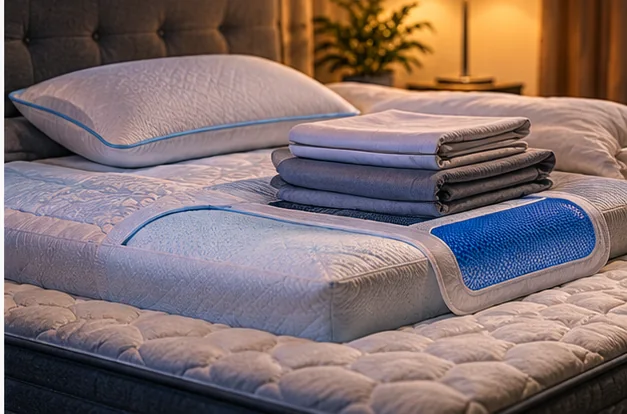
Products and configurations to compare
2–3 inch latex topper
Latex adds pressure relief without the slow deep sink of memory foam and tends to sleep relatively temperature neutral.
Best when: the mattress is too firm but still flat/supportive
Watch for: latex is heavy and more expensive than basic foam
2–3 inch memory foam topper
Memory foam is the easiest way to change surface feel, especially on a firm but otherwise healthy bed.
Best when: you want softer pressure relief at low cost
Watch for: can sleep warmer and make a soft mattress even less supportive
Hybrid mattress replacement
A new mattress is the correct tool when the support system itself has deteriorated.
Best when: the mattress has real sag/body impressions or no longer supports evenly
Watch for: much higher cost and return logistics
Topper: surface layer; mattress: support system
A topper adds a new comfort layer above the existing mattress. It cannot straighten broken or permanently compressed support underneath.
Use a straightedge test
Place a long straight object across the mattress and look for permanent depressions with no one on the bed. Significant sag points toward replacement.
Softening is easier than firming
A topper can reliably soften a firm mattress. Making a too-soft mattress genuinely supportive is much harder because the weak layers remain underneath.
Cooling toppers are often passive
Gel labels and cool-touch covers may improve initial feel, but passive foam cannot actively remove heat like a powered bed-cooling system.
Trial terms matter
Topper returns can be surprisingly restrictive once expanded. Check whether the product is returnable after use.
Materials matter more than marketing labels
“Cooling,” “hotel,” “luxury” and “cloud” do not tell you how fabric will feel. Fiber, weave, fill, loft and construction do. Percale cotton tends to feel crisp and breathable; sateen is smoother and drapier but can feel warmer. Latex pillows are responsive and ventilated; memory foam contours more slowly and may retain more heat. A mattress topper changes surface feel but cannot repair a structurally failed mattress.
Match the product to the problem you are actually solving. Heat is different from pressure relief. Light leakage is different from noise. Pillow loft is different from pillow softness. When a product tries to solve five unrelated sleep problems in one purchase, be especially skeptical.
Return policy can be a performance feature
Sleep products are unusually personal. A pillow that looks perfect on paper can be the wrong height; a topper can change hip sink more than expected; a mattress can feel very different after a full night than it did in a showroom. Check trial, hygiene-return and shipping terms before buying, especially for bulky products that are expensive to send back.
Before checkout
- Primary sleep problem is defined before shopping
- Product dimensions fit the actual bed and room
- Return/trial rules are checked before checkout
- Subscription requirements are understood
- Replacement parts or consumables are available
- Noise level and partner impact are acceptable
- Power/outlet requirements work at the bedside
- Maintenance routine is realistic
- App dependence and offline controls are understood
- Medical symptoms are not being treated as a shopping problem
Total cost is more than the product price
Include subscriptions, special sheets/covers, replacement parts, cleaning products, return shipping, batteries or charging accessories where relevant. A $300 device with a recurring membership can cost more over three years than a $500 device that works fully offline. A cooling system that needs a second unit for the other side of the bed can double at checkout.
Also consider the cost of friction. If a product requires a phone at bedtime, weekly charging, water maintenance or frequent calibration, that routine is part of ownership. Features only have value if you use them.
How to judge it after the first week
Pick one or two outcomes you actually care about before opening the box: fewer temperature adjustments, less light leakage, a pillow that keeps its shape, a quieter-feeling room or data you can understand without obsessing over it. Avoid changing five other bedroom variables at the same time. If the product does not solve the specific problem, use the trial/return period rather than rationalizing an expensive purchase.
For trackers, look at trends rather than one night's score. For mattresses and pillows, give your body enough nights to separate novelty from sustained comfort while staying inside the return window. For light/noise devices, the setup should become easier after a few days, not more elaborate.
Frequently asked questions
Can a topper fix a sagging mattress?
No. It can mask the surface temporarily but cannot restore structural support.
How thick should a topper be?
Two inches makes a moderate change; three inches changes the feel more dramatically. Body weight and mattress firmness affect the result.
Can a topper make a mattress firmer?
Some firm latex toppers can change surface feel, but they cannot fully correct a soft or failed support core.
When should I replace instead?
When sagging, deep impressions or structural support loss are the main complaint.
Current product/source checks
- SaveOnSleep homepage — current live positioning
- Purple Restore Hybrid collection current specs
- Helix Midnight Luxe vs Elite current differences
Affiliate disclosure: SaveOnSleep.com is reader-supported. Amazon shopping links on this page use our Associates tag and may earn us a commission at no extra cost to you. Manufacturer links in the source section are research references, not tracked endorsements.