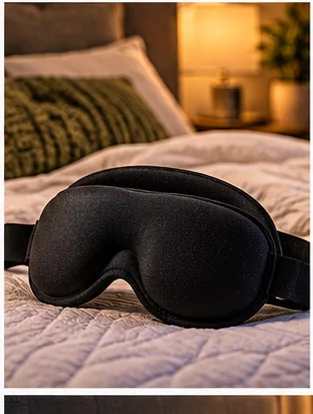
Products and configurations to compare
Manta PRO Sleep Mask
Manta engineered PRO around side sleeping, with low-profile C-shaped cups, anti-slip details and more ventilated materials.
Best when: you sleep on your side and ordinary contoured masks shift or press at the temple
Watch for: $85 is a premium price for a non-electronic mask
Manta Original-style adjustable mask
The modular Manta concept remains strong because the eye cups can be positioned independently for face shape and nose seal.
Best when: you want movable eye cups and full blackout without the side-sleeper premium
Watch for: standard cups are bulkier at the temples
Silk flat sleep mask
Silk is inexpensive, light and comfortable, but it solves a different problem than structured total-blackout cups.
Best when: you want minimum bulk against a pillow
Watch for: flat masks often leak more light around nose/cheeks and press directly on eyelids
PRO exists to solve pillow interference
Manta's current product page specifically emphasizes C-shaped cups that sit flatter at the temple, plus an angled strap that avoids the ears.
Blackout depends on fit, not fabric darkness
Light usually enters around the nose and cheek, not through black fabric. Adjustable cup position is why Manta can outperform simple flat masks.
Breathability is the premium material story
The PRO uses perforated foam and mesh to reduce the hot, damp feeling common in thick contoured masks.
Eye pressure matters if you blink/open eyes
Hollow cups keep fabric away from eyelashes and lids. That is more comfortable for people who dislike direct pressure.
The cheapest fix may be curtains
If the mask is compensating for a bright bedroom every night, blackout curtains can remove the need to wear anything on the face.
Fix the room before adding expensive technology
Light, noise, temperature and bedding comfort form the basic sleep environment. Blackout curtains, a well-fitted mask, a steady background sound and breathable bedding often improve the bedroom experience for far less money than a premium connected system. The expensive device should solve the remaining problem, not compensate for a room that still has glaring LEDs and morning sun through the blinds.
Make changes one at a time where practical. If you install blackout curtains, switch pillows and add active cooling on the same night, you will not know which purchase actually helped. A bedroom can become expensive very quickly when every poor night produces another order.
Comfort is subjective, measurements are not
You can measure room temperature, curtain light gaps, pillow loft, mattress thickness and device noise. Use objective measurements to narrow the options, then accept that comfort still requires a personal trial. A guide should reduce the number of bad choices, not pretend it can predict exactly what every sleeper will prefer.
Before checkout
- Primary sleep problem is defined before shopping
- Product dimensions fit the actual bed and room
- Return/trial rules are checked before checkout
- Subscription requirements are understood
- Replacement parts or consumables are available
- Noise level and partner impact are acceptable
- Power/outlet requirements work at the bedside
- Maintenance routine is realistic
- App dependence and offline controls are understood
- Medical symptoms are not being treated as a shopping problem
Total cost is more than the product price
Include subscriptions, special sheets/covers, replacement parts, cleaning products, return shipping, batteries or charging accessories where relevant. A $300 device with a recurring membership can cost more over three years than a $500 device that works fully offline. A cooling system that needs a second unit for the other side of the bed can double at checkout.
Also consider the cost of friction. If a product requires a phone at bedtime, weekly charging, water maintenance or frequent calibration, that routine is part of ownership. Features only have value if you use them.
How to judge it after the first week
Pick one or two outcomes you actually care about before opening the box: fewer temperature adjustments, less light leakage, a pillow that keeps its shape, a quieter-feeling room or data you can understand without obsessing over it. Avoid changing five other bedroom variables at the same time. If the product does not solve the specific problem, use the trial/return period rather than rationalizing an expensive purchase.
For trackers, look at trends rather than one night's score. For mattresses and pillows, give your body enough nights to separate novelty from sustained comfort while staying inside the return window. For light/noise devices, the setup should become easier after a few days, not more elaborate.
Frequently asked questions
How much is Manta PRO?
Manta currently lists the PRO at $85.
Is Manta PRO specifically for side sleepers?
Yes. The current design explicitly focuses on side-sleep comfort.
Does it press on the eyelids?
Manta's hollow adjustable cups are designed to keep pressure off the eyelids/lashes.
Is a silk mask better?
It is thinner and cheaper, but usually offers less structured blackout around the face.
Current product/source checks
Affiliate disclosure: SaveOnSleep.com is reader-supported. Amazon shopping links on this page use our Associates tag and may earn us a commission at no extra cost to you. Manufacturer links in the source section are research references, not tracked endorsements.