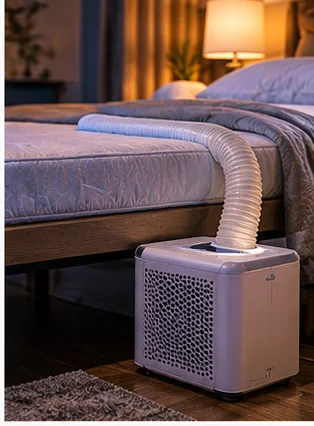
Products and configurations to compare
Chilipad 2.0 single-zone
The redesign targets ownership friction rather than only colder numbers.
Best when: you want active cooling without a subscription
Watch for: water-system upkeep and premium price remain
Chilipad 2.0 dual-zone
Independent sides are where active bed cooling becomes most valuable for couples with different preferences.
Best when: partners need independent temperature preferences
Watch for: double-sided configurations raise price quickly
Chilipad 1.0 / Dock Pro
Sleepme now labels the former Dock Pro platform as Chilipad 1.0 while supplies last.
Best when: you find a steep clearance price and accept older hardware
Watch for: older dock, more refill/maintenance friction and legacy status
The temperature range remains broad
Sleepme documents 55–115°F for the current Chilipad family. Treat that as system setpoint capability, not a promise that every sleeper will experience identical skin temperature.
The remote matters more than it sounds
A bedside physical remote means ordinary adjustments do not require a phone. For sleep products, reducing nighttime screen dependence is a genuine usability advantage.
No subscription is part of the product identity
Schedules and Warm Awake are advertised without a subscription, a strong contrast with premium tracking-centric competitors.
Maintenance does not disappear
It is still a water system. Refilling, periodic cleaning and storage/draining procedures remain part of the category.
1.0 owners should upgrade for friction, not raw necessity
If an existing Dock Pro works reliably, 2.0's biggest gains are quieter/smarter hardware, fewer refills and the redesigned cover.
Bed cooling and room cooling solve different problems
A mattress-pad system or BedJet changes the microclimate immediately around your body. It does not reduce the temperature of the entire bedroom. That can be efficient when only the bed feels hot, but if the room itself is extremely warm and humid, air conditioning or whole-room climate control may still be the foundational fix.
Water-based systems actively transfer heat through a circulating pad and can hold a setpoint below room temperature. Air-based systems move conditioned room air through the bedding and excel at reducing the hot, humid pocket under the covers. Neither architecture is universally superior; the choice depends on how cool you want the surface, how you feel about water maintenance and whether you need independent sides.
Maintenance belongs in the buying decision
Water systems need reservoirs, periodic cleaning and hose management. Air systems need a clear intake, under-bed or bedside space and an occasional washable-filter cleaning. The system you maintain consistently is better than the theoretically stronger system you resent after two weeks.
Before checkout
- Primary sleep problem is defined before shopping
- Product dimensions fit the actual bed and room
- Return/trial rules are checked before checkout
- Subscription requirements are understood
- Replacement parts or consumables are available
- Noise level and partner impact are acceptable
- Power/outlet requirements work at the bedside
- Maintenance routine is realistic
- App dependence and offline controls are understood
- Medical symptoms are not being treated as a shopping problem
Total cost is more than the product price
Include subscriptions, special sheets/covers, replacement parts, cleaning products, return shipping, batteries or charging accessories where relevant. A $300 device with a recurring membership can cost more over three years than a $500 device that works fully offline. A cooling system that needs a second unit for the other side of the bed can double at checkout.
Also consider the cost of friction. If a product requires a phone at bedtime, weekly charging, water maintenance or frequent calibration, that routine is part of ownership. Features only have value if you use them.
How to judge it after the first week
Pick one or two outcomes you actually care about before opening the box: fewer temperature adjustments, less light leakage, a pillow that keeps its shape, a quieter-feeling room or data you can understand without obsessing over it. Avoid changing five other bedroom variables at the same time. If the product does not solve the specific problem, use the trial/return period rather than rationalizing an expensive purchase.
For trackers, look at trends rather than one night's score. For mattresses and pillows, give your body enough nights to separate novelty from sustained comfort while staying inside the return window. For light/noise devices, the setup should become easier after a few days, not more elaborate.
Frequently asked questions
What temperature range does Chilipad support?
Sleepme currently advertises 55–115°F.
Does Chilipad 2.0 need a subscription?
Sleepme advertises no subscription fees.
Is Dock Pro discontinued?
Sleepme currently labels the older Dock Pro platform as Chilipad 1.0 while supplies last.
Can I use it without the app?
The current 2.0 includes a nightstand remote; app scheduling remains available.
Current product/source checks
Affiliate disclosure: SaveOnSleep.com is reader-supported. Amazon shopping links on this page use our Associates tag and may earn us a commission at no extra cost to you. Manufacturer links in the source section are research references, not tracked endorsements.